


SEARCH DONGGUK UNIVERSITY
Academics
College of Education
- 홈
- Academics
- Colleges
-
College of Education
- College of Buddhist Studies
- College of Humanities
- College of Natural Science
- College of Law
- College of the Social Science
- College of Police and Criminal Justice
- Dongguk Business School
- College of Life Science and Biotechnology
- College of Engineering
- College of Advanced Convergence Engineering
- College of Education
- College of Arts
- College of the Pharmacy
- College of Future Convergence
- Dharma College
- School of Interdisciplinary Studies
College of Education
College of Education

College of Education
Educational Objective
The College of Education was founded in 1968 with four Departments. These were the departments of Korean Language Education, Social Education (renamed to Geography Education in 1981), Science
Education (abolished in 1976), and Mathematics Education. Over time, other departments were added to the college: The Department of Physical Education in 1969, Home Economics Education in
1971, and the Departments of Education and History Education in 1975. At the present time, the College of Education consists of 7 departments, including the departments of Education, Korean
Language Education, History Education, Geography Education, Mathematics Education, Home Economics Education, and Physical Education.
Each department offers a Bachelor's degree in their undergraduate program and Master's and Doctoral degrees in their graduate program. Students who complete all required courses and
practical training are awarded a Bachelor's degree (Bachelor of Arts or Bachelor of Science) and a Certificate of Teaching for secondary schools in Korea. Students in the graduate program
for the Master's degree are awarded a Master of Arts or Master of Science based on their major. In the case of the Doctoral degree, the title of the Doctoral degrees includes Doctor of
Arts, Doctor of Science, Doctor of Geography, Doctor of Home Economics, and Doctor of Education according to the degree program of each department. The total number of alumni from the college
in 2010 was 10,560. A total of 279 Master's degrees and 190 Doctoral degrees have been presented as of February, 2010
In addition to the regular graduate program, there is a Bachelor 's-Master's degree tier program and a Master 's-Doctoral degree tier program. Students apply to the
Bachelor-Master's degree tier program in the 7th semester of their undergraduate program and/or 3rd semester of the Master's degree program for the Master-Doctoral degree tier program.
The Bachelor-Master's degree tier program is only offered in the departments of Education, Geography Education, Mathematics Education, and Physical Education; and three departments,
including Education, Geography Education, and Home Economics Education, currently offer a Master-Doctoral degree tier program.
In the second semester of their freshman year, undergraduate students in the College of Education may apply (at the start of each semester) for a second major, including the General Social
Education major. Students may transfer to other departments within the university at the end of their freshman year, but students from other colleges within the university CANNOT transfer to
any department in the College of Education.
Also, students from other universities (not Dongguk) may transfer to any department of this college. Once they become students of the College of Education, they may also select a double major
program. The College of Education has seven attached secondary schools - four middle schools and three high schools. The Graduate School of Education is running a program for 'Master of
Education' to re-educate present secondary school teachers and to train future secondary school teachers.
All classes are open in the evening on Wednesdays and Thursdays. When students in the Master's Degree program complete their required courses and thesis, they earn the degree of
'Master of Education'. Students who enroll in the Master's degree program and the Teacher Training program are awarded a Master's degree as well as a Certificate of Teaching
when they complete the required courses, practical teaching training, and thesis.
- Office
College of Education
- Tel
+82-2-2260-3108~10
Department of Education
Introduction
The undergraduate program in the Department of Education provides intensive coursework and field experience that lead to a teaching certificate in secondary education.
Through theories and practice, the Department also strives to prepare students to serve as professionals in a variety of education-related fields. Students are exposed to an array of topics of interest in education, both (a) in traditional areas such as educational philosophy, curriculum, educational sociology, educational psychology, and counseling psychology, and (b) emerging areas such as cyber-learning, developments in higher education, and education for gifted children.
The Master's and Doctoral program major in Education was started in 1979 in order to produce pedagogists, educational researchers, educational administrators, and educational practitioners, who can solve practical educational problems, based on theoretical research of pedagogy.
The Department of Education opened various classes covering the entire pedagogy according to trends in the development of pedagogy, such as the History of Education, Educational Philosophy, Educational Policy, Educational Administration, Educational Curriculum, Educational Technology, Educational Psychology, and Educational Counseling.
Students go through a systematic, in-depth research and understanding process that covers the entire pedagogy, learning from professors in each subject. Students who complete these majors will work in several social sectors, including specialized educational areas after graduating from graduate school, educational administration, lifelong education and training, and research centers of companies.
Curriculum
Philosophy of Education
This course investigates the scientific characteristics, methods, and various positions of philosophy of education as well as how the theory of education can differ according to them.
Educational Psychology
In order to understand various problems that occur in educational settings, this course teaches the intellectual, emotional, and social development of individuals, the principles of learning, characteristics, and individual variation, and how these factors interact with each other, focusing on learning.
Educational Technology
This course researches all concrete problems in the teaching-learning process in order to find the most effective teaching and learning methods.
Educational Measurement and Evaluation
This course is designed to understand the way tests, examinations, grades, and recognition of various qualifications, which can be easily seen in the overall developmental process of education, are conceptualized, and what kinds of methods are used.
Science of Educational Administration
This course analyzes concepts, characteristics, essences, functions, field, and content in order to understand the fundamental theory and normative knowledge in educational Administration.
Curriculum Theories
This course investigates the core object of curriculum theory and practice, as well as the research methods of curriculum.
Professors
| Name | Picture | Major | Final degree school | |
|---|---|---|---|---|
| Sun-Hyung Park |  |
Educational Administration | Univ. of Tasmania, Australia | sunhpark@dongguk.edu |
| Sang-Sik Cho |  |
Philosophy of education, Western education history |
Georg-August Univ. Goettingen | educandus@dongguk.edu |
| Na-Min Shin |  |
Educational Technology | Pennsylvania State Univ. | naminshin@dgu.edu |
| Jong-Bae Park |  |
Educational History (Korea/Oriental) |
Seoul National Univ. | jbpark@dongguk.edu |
| Cho-Hee Yoon |  |
Educational Psychology | Univ.of Washington | chyoon@dongguk.edu |
| Hyun-Joo Park |  |
Counseling Psychology, Counselor Training |
Univ. of Missouri, Columbia | hjpark@dongguk.edu |
| Hwan-Young Jang |  |
Human Resource Development, Lifelong education, Performance Engineering |
Indiana Univ. | welcome9@naver.com |
| Hyo-Jung Lee |  |
Special Education | Univ. of Kansas | hjlee05@gmail.com |
| Sang-Eun Lee |  |
Curriculum Studies | Univ. College London | eun000@dongguk.edu |
- Office
Department of Education Studies
- Tel
+82-2-2260-8744
Department of Korean Language Education
Introduction
Students who become Korean teachers in the future should attain an equal share of knowledge across all fields of the major (Korean linguistics, modern literature, classical literature, and Korean language education). Based on general theories of linguistics, they develop academic research on the general structure of the Korean language, improve their knowledge of the Korean language and literature, and master the traditions and values of the Korean language and literature.
Curriculum
Introduction to Classical Literature Education
The purpose of this course is to create a basic grounding and elementary knowledge in classical literature and to further study classical literature deeply and specifically.
Theory of Teaching Speech
This course enhances speaking and listening abilities, which are the basic structure of verbal communication, as well as tools to understand and express thoughts and feelings through speaking and writing effectively.
Introduction to Korean Language Study and Korean Language Education
This course examines the effective and desirable use of the Korean language as a tool of expression, along with universal/general theories of linguistics.
Modern Novel and Novel Education
This course allows students to acquire empirical knowledge about the nature of fiction through preliminary research on modern fiction to read individual works.
Development of Contemporary Korean Literature
This course focuses on diachronically identifying the fall of Middle Age literature and the development of modern literature from the 17th and 18th centuries to 8.15 independence. The course also places great importance on in-depth understanding of meaningful works in history as well as the increase of theoretical cognition on the fundamental problems of literary history.
Professors
| Name | Picture | Major | Final degree school | |
|---|---|---|---|---|
| Jae-Woong Yoon |  |
Modern Literature Education | Dongguk Univ. | shouuu@hanmail.net |
| Hye-Yeon KIm |  |
Korean Language Education | Seoul National Univ. | hyeyoun.kim@dgu.ac.kr |
| Han-Sung Jeon |  |
Modern Literature Education | Dongguk Univ. | maldoror13@hanmail.net |
| Seong-Yoon Cho |  |
Classic Literature Education | Dongguk Univ. | 21cteacher@dgu.ac.kr |
| Won-young Lee |  |
Modern Poetry Education | Dongguk Univ. | haha2tb@gmail.com |
- Office
Department of Korean Language Education Studies
- Tel
+82-2-2260-8746
Department of History Education
Introduction
The Department's primary purpose is to cultivate history teachers for secondary schools. Therefore, students of the Department study both the history and theories required for teaching. Due to the characteristics of the Department, field investigation of historical remains is carried out twice a year, in the spring and fall.
For graduate work, the department holds an exhibition of rubbings for 4th-year students to give them an opportunity to experience history. The educational goal of the Department of History Education, General Graduate School, at Dongguk University is to help students study in depth the content of history education and teaching methodologies that make good history education possible.
In other words, the department focuses on helping students learn a correct historical view by learning the development of world history, including Korean history, both totally and systematically, and grow their history educational teaching and learning capability to deliver learned knowledge and information both precisely and effectively.
Therefore, in this department, students extensively research their major subjects such as the theory of history, history curriculum (Korean history, Asian history, European history and Third world history), resource study, theory of history education and theory of history education methodology, with contents of history study and history education study learnt in undergraduate study and a general graduate school and graduate school of education (doctorial program only).
As a result, the department helps students acquire the qualities necessary to be history education researchers, school teachers, and professional educational administrators, who will lead national history education.
Curriculum
Introduction to Modern History
This course teaches the basics of historical science, centering on concepts, thoughts, and research methods of history and the development of historical theory.
Making of Modern East Asian Society
This course follows the theory of historical periodization, which sets " modern times" between pre-modern society and modern society, yet tries to be free from the traditional lecture on this history. This course also seeks to find a true description of world history by broadly dealing with and actively interpreting the events of contact between the East and the West. This course focuses on modern times, and modernization centered on historical description in order to clarify the distinctive meaning of "modern times" in Asian society.
History of Western During the Modern & Contemporary Age
Based on the people's revolution, industrial revolution, and imperialism, this course outlines the First & Second World Wars, the establishment of the Cold War, and the flow of world history after the fall of socialism.
Pre-modern History of Korea 1: Ancient History
This course systematically lectures on the formation, flow, and development process of culture from primitive society to the early Goryeo dynasty in Korea, in order to understand the society of ancient times in Korea.
Pre-modern History of Korea 2: Medieval History
This course systematically presents the historical flow from the middle-Goryeo period to the middle-Joseon period and teaches students about the social life and spiritual culture in the Middle Ages of Korea, especially focusing on the change of Goryeo Buddhism aristocracy since the middle of the Goryeo period as well as the appearance of the new gentry in the late-Goryeo period.
History of Korea During the Modern & Contemporary Age
This course intensively analyzes and evaluates the development process of the modern & contemporary times after the late Joseon period.
Professors
| Name | Picture | Major | Final degree school | |
|---|---|---|---|---|
| Seon-Tae Yoon |  |
Korean Ancient History | Seoul National Univ. | yoonst@dongguk.edu |
| Jong-Pil Yoon |  |
History Education Theory | Korea Univ. | jpyoon1982@dongguk.edu |
| Cho-Geon |  |
Korean Modern History | Dongguk Univ. | sophrosyne@dongguk.edu |
| Mingu Nam |  |
Chinese Early Modern History | Yonsei Univ. | nammingu@dongguk.edu |
- Office
Department of History Education Studies
- Tel
+82-2-2260-8747
Department of Geography Education
Introduction
The study of geography, which examines the environment, is best suited to cultivating those who can minimize the destructive influences of modern society. The Department of Geography Education delivers the qualification and knowledge required for future geography teachers.
Geography is a science that helps people develop an affection for the natural environment, the earth, and mankind. It has characteristics of both natural science and social science, as it studies natural environments and cultural phenomena occurring on Earth's surface, as well as the mutual relationships between human beings and nature. Students are systematically educated to understand knowledge, theories, and research methods regarding geography, and to verify them through field investigation.
The program aims at producing geography teachers and talented geographers who have comprehensive and rational thoughts and are able to respond to globalization.
Curriculum
Life and Culture
Centering on culture, an important part of human life, this course examines the concepts of cultural geography, research subject, and research method in relation to a particular theme. In addition, this study combines theory and reality through case studies.
Climatic Geomorphology
This course introduces the development and the basic concept of climatic geomorphology. Students learn the specific, detailed content of Climatic geomorphology.
Physical Geography
The purpose of this course is to identify the basic contents that compose the natural environment, such as climate, soil, and plant communities, and then to understand the basic concept and structure of physical geography.
Human Geography
This course systematically explains geographic phenomena that have resulted from human activities, in that geographic features such as economy, living space, history, and population group are the subject of the activity to help students' understanding.
Regional Geography of Korea
This course teaches the contents and methodology of Korean regional geography. To achieve this goal, this course identifies Korean natural geographic features and cultural contexts and analyzes their relationships to comprehensively understand Korean regional geography.
Professors
| Name | Picture | Major | Final degree school | |
|---|---|---|---|---|
| Jae-Seob Ahn |  |
Urban Geography | Seoul National Univ. | jsa@dongguk.edu |
| Seung-Chul Lee |  |
Economic Geography | Univ. of Sussex | leesc@dongguk.edu |
| Byung-Yoon Yang |  |
Geoinformatics and Remote exploration |
Univ. of Georgia | yby94@dgu.ac.kr |
| Yoosoon AN |  |
Physical Geography | Seoul National Univ. | newsoon@gmail.com |
- Office
Department of Geography Education Studies
- Tel
+82-2-2260-8748
Department of Mathematics Education
Introduction
Mathematics Education is a comprehensive science that considers many related science fields, including pure mathematics, the theory of mathematics, applied mathematics, psychology of learning mathematics, and the theory of mathematics education.
Hence, the research on it requires professional decisions. To solve a real problem, synthetic teaching of mathematics on epistemological and psychological bases, the department of mathematics education carries out ongoing and thorough research.
The purpose of the department of mathematics education in our Graduate School is to foster specialists of mathematics education covering major issues in mathematics and curriculum education in order to take a leading role in developing national education by developing and distributing systematic, comprehensive, and trial models for each school. To achieve this goal, the school provides all the necessary foundations for students to become higher-level educational specialists who can lead academic development and create new educational programs by equally learning all developmental aspects of pure study and applied fields of study.
In addition, the school integrates theories and practices of mathematics education and introduces them into school teaching by accepting new theories and methodologies of mathematics education and modifying them for the current Korean educational environment.
Curriculum
Complex Analysis Ⅱ
This course teaches the characteristics of complex numbers and geometric meaning, and systematically covers the theoretical background and theory of complex variables, and shows how to apply them.
Analysis I
Based on differential and integral calculus, this course inquires into the characteristics of a set, the classification of the numeral system, the characteristics of a real number, the utmost limits, and the continuity, which leads to strengthening the basic theory of analysis and studying the contents of the subjects mentioned above in the context of the contents of middle or high school mathematics.
Linear Algebra Ⅱ
This course deals with systems of linear equations and matrices. In this course, students learn determinants, vectors in 2-space and 3-space, Euclidean vector spaces, and real vector spaces.
Modern Algebra Ⅱ
In this course, students learn the definitions of homomorphism and isomorphism in groups. Also, they study the Sylow Theorem, free abelian groups, and free groups.
Geometry
Using various kinds of software, this course investigates the general characteristics and the relations of devices that haven't been used in the present geometric education.
Topology Ⅱ
This course is one of the curricula for math teachers. an algebra, and it deals with its relationships, visualization, accumulation of real numbers, and continuity of real numbers.
professors
| Name | Picture | Major | Final degree school | |
|---|---|---|---|---|
| Sun-Shin Ahn |  |
Algebra | Yonsei Univ. | sunshine@dongguk.edu |
| Joong-Kwoen Lee |  |
Mathematics Education | Univ. of Georgia | joonglee@dongguk.edu |
| Han-Ju Lee |  |
Analysis | KAIST | hanjulee@dongguk.edu |
| Dong-Han Kim |  |
Applied Mathematics | KAIST | drkimdh@gmail.com |
- Office
Department of Mathematics Education Studies
- Tel
+82-2-2260-8749
Department of Home Economics Education
Introduction
The Department of Home Economics Education aims to improve the quality of the surrounding environment in which humans make our living and, consequently, enhance the quality of life in general.
Also, it nurtures not only teachers at middle and high schools but also professionals in the human ecology fields of Consumer and Home Management, Clothing & Textiles, Food & Nutrition, and Child & Family.
The purpose of the Department of Home Economics is to promote the quality of family life and the welfare of families and their members. To accomplish this goal, the department intensively studies the effective management of human and material resources within families by encouraging smooth interactions among individuals, families, and the environment. The department has four majors: Consumer Studies, Clothing & Textile, Food & Nutrition, and Child & Family as subspecialties.
Consumer Studies focuses on providing information about consumer behaviors, which can increase effective use of resources, economy, welfare, and the capability of consumers and their families. Clothing & Textile Studies offers programs designed to provide students with an understanding of the apparel industry and its consumers.
The purpose of Clothing & Textile Studies is to foster specialists who can engage in all types of occupations required in the apparel industry, through the organized teaching and training of the entire field of clothing and textiles The purpose of the Study of Food & Nutrition is to produce professional researchers who more deeply study basic and major fields of Food & Nutrition and specialists who can contribute on improvement of dietary life in the real world using such research results. The Study of Child & Family explores the development of the human and family, mainly with a psychological and social approach.
Curriculum
Basic Nutrition
This course focuses on the principles, concepts, and application of the science of human nutrition. It covers absorption, metabolism, function, and requirements of nutrients.
Introduction to Family Science
This course is based on basic principles concerning the origin, structure, dynamics, and function of the family, discussions of gender roles and class, and investigates characteristics and problems of the modern family.
Consumer Decision Making
This course studies the process by which 1) consumers identify their needs, 2) collect information, 3) evaluate alternatives, and 4) make the purchase decision, and analyzes consumer behaviors that are determined by psychological and economic factors, and are influenced by environmental factors such as cultural, group, and social values.
Textiles
General study of textile materials with emphasis on factors that affect the hand, appearance, and performance. Students learn the properties of natural and man-made fibers, how yarn is formed, production methods, the properties of a wide variety of textile fabrics, and dyeing and finishing techniques.
Housing
This course investigates the critical properties of traditional housing culture and the important attributes of housing in modern urban environments from historical, psychological, physical, sociological, and economic perspectives. Furthermore, students will explore how to build a desirable housing environment and how to promote the quality of Korean housing culture.
Professors
| Name | Picture | Major | Final degree school | |
|---|---|---|---|---|
| Sim-Yeol Lee |  |
Food & Nutrition | Seoul National Univ. | slee@dongguk.edu |
| Mi-Kyung Jeon |  |
Child and Family Studies | Dongguk Univ. | preba@chol.com |
| Ju-Woon Jeong | 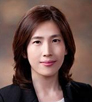 |
Consumer Science | Dongguk Univ. | - |
| Seon-young Youn |  |
Textile Science & Textile Technology & Wearable Technology | North Carolina State Univ. | syoun@dongguk.edu |
- Office
Department of Home Economics Education Studies
- Tel
+82-2-2260-8750
Department of Physical Education
Introduction
The study of physical education develops a general understanding of liberal and social sciences and natural science, and approaches functions of exercise based on understanding physical activities from the viewpoints of physiology, mechanics, psychology, sociology, and methodology.
The purpose of the Department of Physical Education is to foster and produce professionals in Physical Education and to fulfill the roles of Physical Education as social functions by establishing systematic theories and improving adaptation through scientific research on the theories and practices of Physical Education.
In addition, the department engages in theoretical research in the humanities and social sciences, as well as in the natural science sector of Physical Education and the practice of exercise functions.
Finally, the department improves versatility, professional leadership, and research capability in social adjustment. The department aims to cultivate physical education teachers who have basic physical strength, the ability to carry out exercises, leadership, the ability to perform various sports and leisure activities, and the ability to protect health and safety.
The curriculum is divided into theory and practice, which are offered at the same time. At present, the study of physical education is attempting to develop into a physical science.
Curriculum
Biomechanics
The purpose of this course is to understand the mechanical analysis and theory concerning physical exercise. The course helps students conduct active research using international theory and information systems, apply these effectively, and learn the teaching method for performance improvement.
Cultural History of Physical Education
This course examines the domestic and foreign transition processes of physical education and the thoughts on physical education in and outside Korea, using systematic information materials. Also, this course provides background on the ideas and helps students understand the cultural context of human life at the same time.
Exercise Physiology
Through this course, students attain an understanding of basic knowledge of the skeletal structure, muscles, nerves, circulation, excretion, digestion, etc. of the human body in order to learn the physiological interactions in human body activity. Through application and new international information materials, students learn to place a high value on human life.
Psychology of Exercise
The purpose of this course is to understand psychological factors and foundations of human exercise performance according to situational conditions. This course researches theories on cognition of exercise, exercise development, exercise, game psychology, health psychology, and so on in order to foster the leadership potential in physical education courses in secondary schools.
Sociology of Sports
This study contemplates the social aspect of physical education and sports activities through a sociological research method and, through the wide latitude of understanding, fosters teaching performance in secondary physical education.
Professors
| Name | Picture | Major | Final degree school | |
|---|---|---|---|---|
| Jae-Hyun Shon |  |
Educational Dance | Hanyang Univ. | shon3420@hanmail.net |
| Eon-Ho Kim |  |
Exercise Science | Univ. of Oklahoma | eonkim@dongguk.edu |
| Jeh-Kwang Ryu |  |
Sports Psychology | Seoul National Univ. | ryujk@dongguk.edu |
- Office
Department of Physical Education Studies
- Tel
+82-2-2260-3481

- Seoul Campus
- 30, Pildong-ro 1-gil, Jung-gu, Seoul, 04620, Republic of Korea
- Tel. +82-2-2260-3314 Fax. +82-2-2260-2277
- incoming@dongguk.eduExchange Program
- scf@dongguk.eduInternational Students Services
- adm@dongguk.eduInternational admission
- cscenter@dongguk.eduCertificate Issuance, Education Verification
- kic@dongguk.eduKorean Language Course
Copyright(c) DONGGUK UNIVERSITY. ALL RIGHTS RESERVED.